Intervention research
UTILISE
(Unification Therapy Integrating LexIcon and SEntences)

If you are interested in learning more about the “UTILISE” project, you can read our Open Science Framework registered pre-print. The UTILISE project consists of two trials, generously funded by three grant awards by the UK Stroke Association.
Read our latest articles here:
xxx | xxx
We have developed an app version of our therapy program. This means that participants are able to access the therapy from the comfort of their own home.
Why is this research important?
One consequence of stroke can be aphasia - difficulty understanding and producing language. It limits a person's ability to take part in conversations. There has been considerable progress in understanding difficulties with vocabulary in aphasia, but less progress in understanding difficulties with sentences. This is a problem as everyday talking involves sentences, and understanding and using sentences are critical for taking part in conversations. We apply a new theory of sentence processing to aphasia – usage based Construction Grammar. We think this idea may transform understanding and treatment of sentence difficulties. We have developed a new therapy that may help people to understand and produce sentences. We focus on every-day, common sentences so that the therapy gives people useful tools to communicate their needs and ideas.
Our previous research:
[UPDATE: U-1 publications]
In our earlier work, we explored the value of a usage-based approach to apraxia of speech (Varley et al. Stroke 2016). Then, in a project funded by The Stroke Association that we are now referring to as “UTILISE 1”, we applied similar ideas to intervention for sentence difficulties in aphasia. Recruitment for the in-person “UTILISE 1” project has finished. The project - Reconstructing Sentence Processing in Aphasia – examined sentence comprehension and production difficulties under a Construction Grammar framework. With the assistance of participants with aphasia, we examined if the computerised therapy, delivered in-person, one-on-one with a researcher, improved understanding and production of sentences. We also examined, by means of MRI scans (for those it was safe for), whether there were any structural patterns that correlated with improvement. The recruitment for that project ended in early 2023, and data analysis and reporting is ongoing. You can access the “UTILISE 1” study protocol here.
UTILISE-2:
We converted our therapy programme into an app that can be used on Apple iPad. We launched the wider app trial in 2023 and completed participant recruitment and testing in April 2025. Participants were lent an iPad that they used to access the therapy from home. Remote therapy is hugely important; it provides the option for participants to have higher “doses” of therapy as the therapy can be used whenever the person wants, without having to factor in time and expense factors like travelling to appointments and working with a therapist. The research group monitored people’s engagement and progress, checking in and assisting where necessary, but the app allowed for more autonomy.
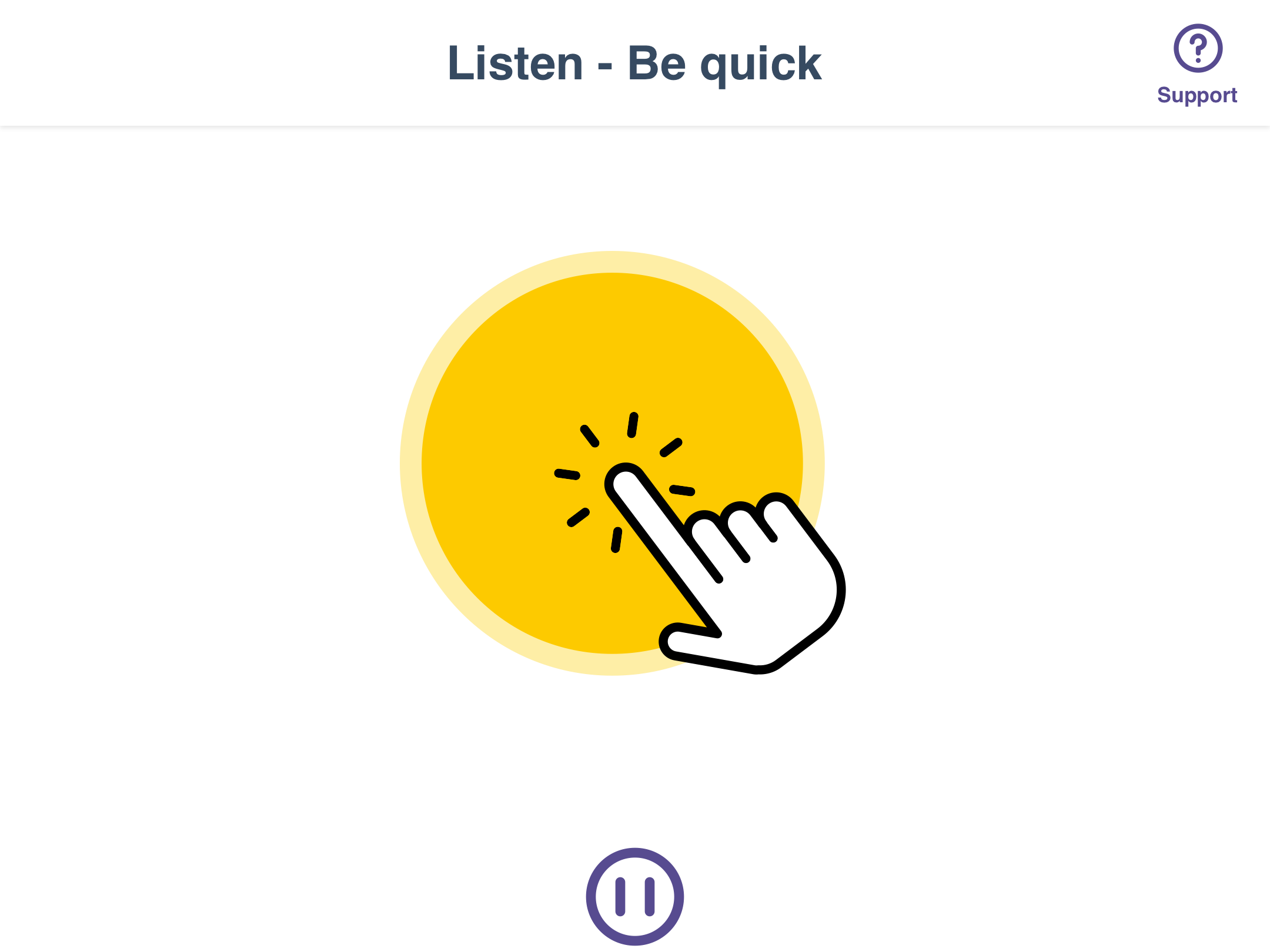
The therapy has 3 stages, each of which are carefully designed to target high frequency structures that are useful for every day conversations.
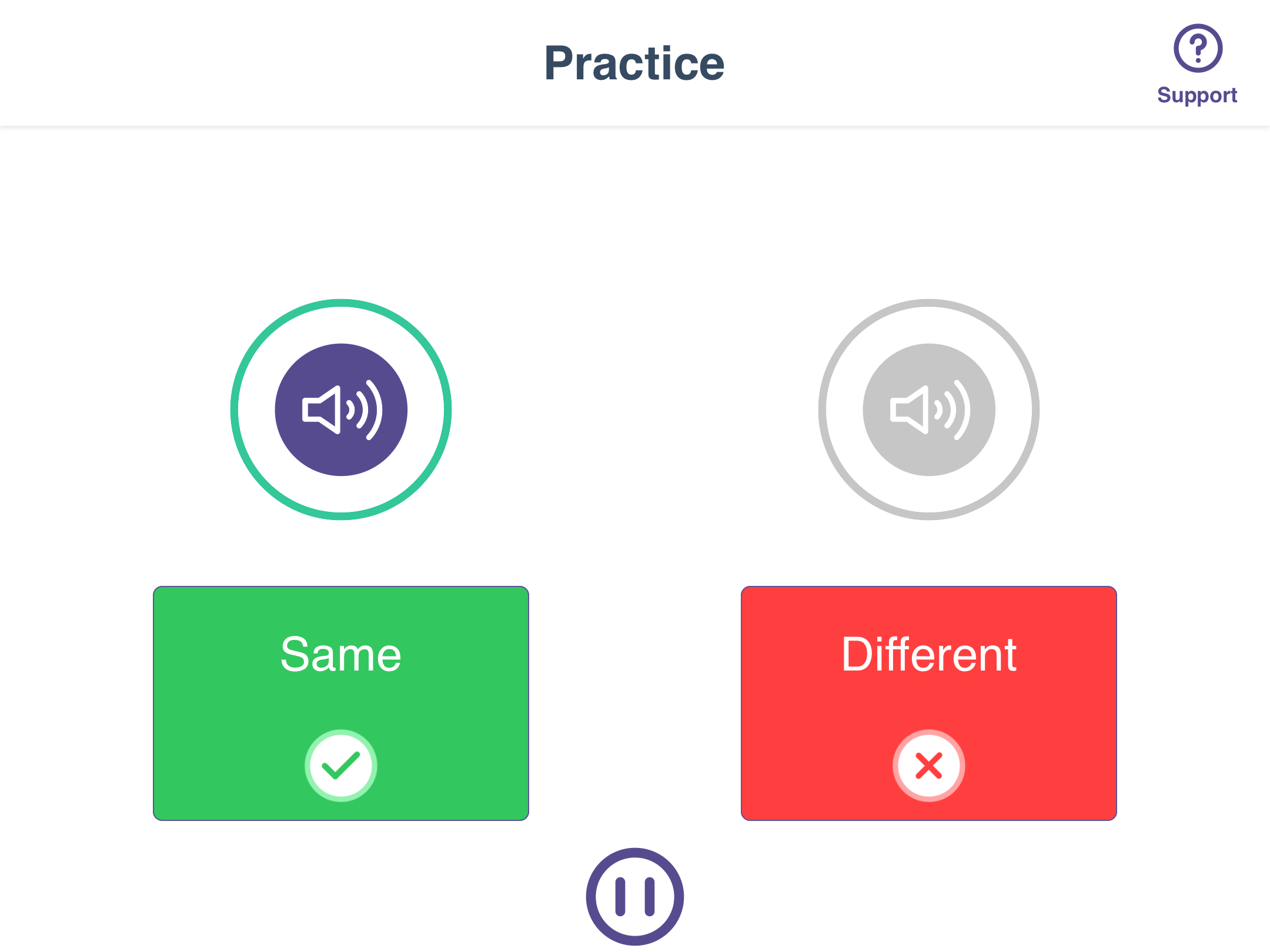
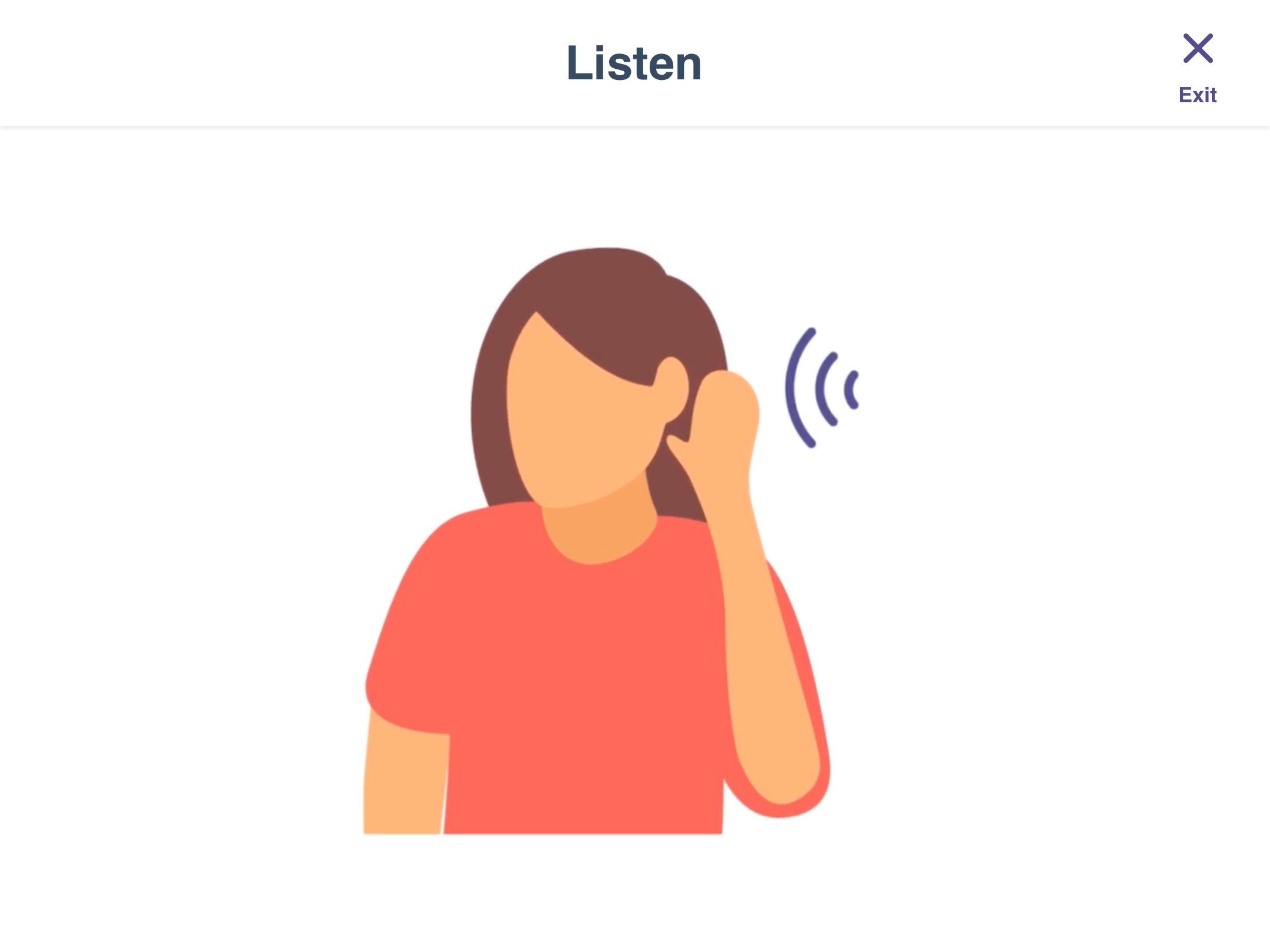
“Listen - Same or Different?”
Are the two speakers saying the same sentences? Listen carefully as sentences get longer!
“Listen - Be Quick!”
Keep an ear out for the target word in the sentence… try to be as quick as possible!
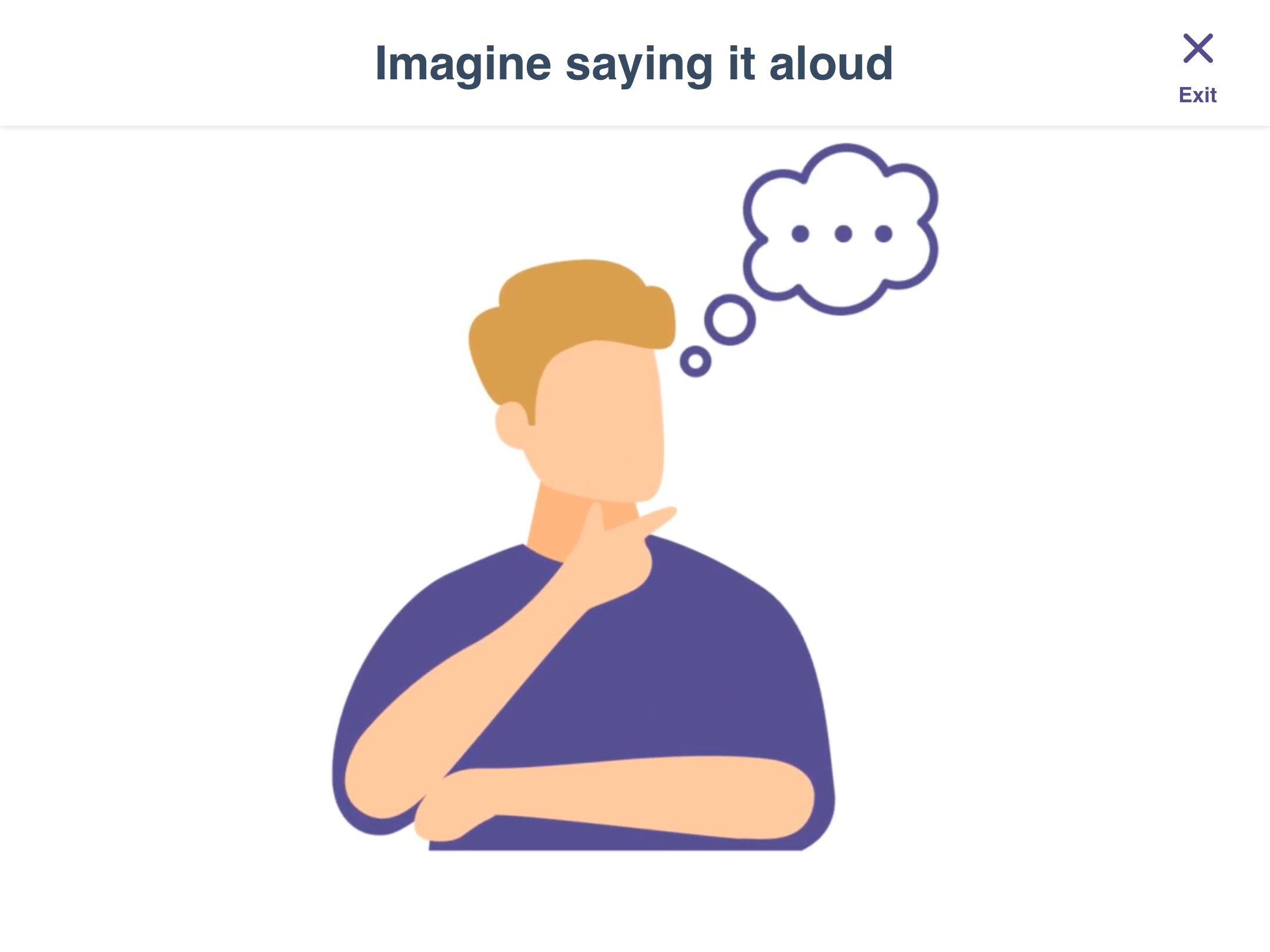
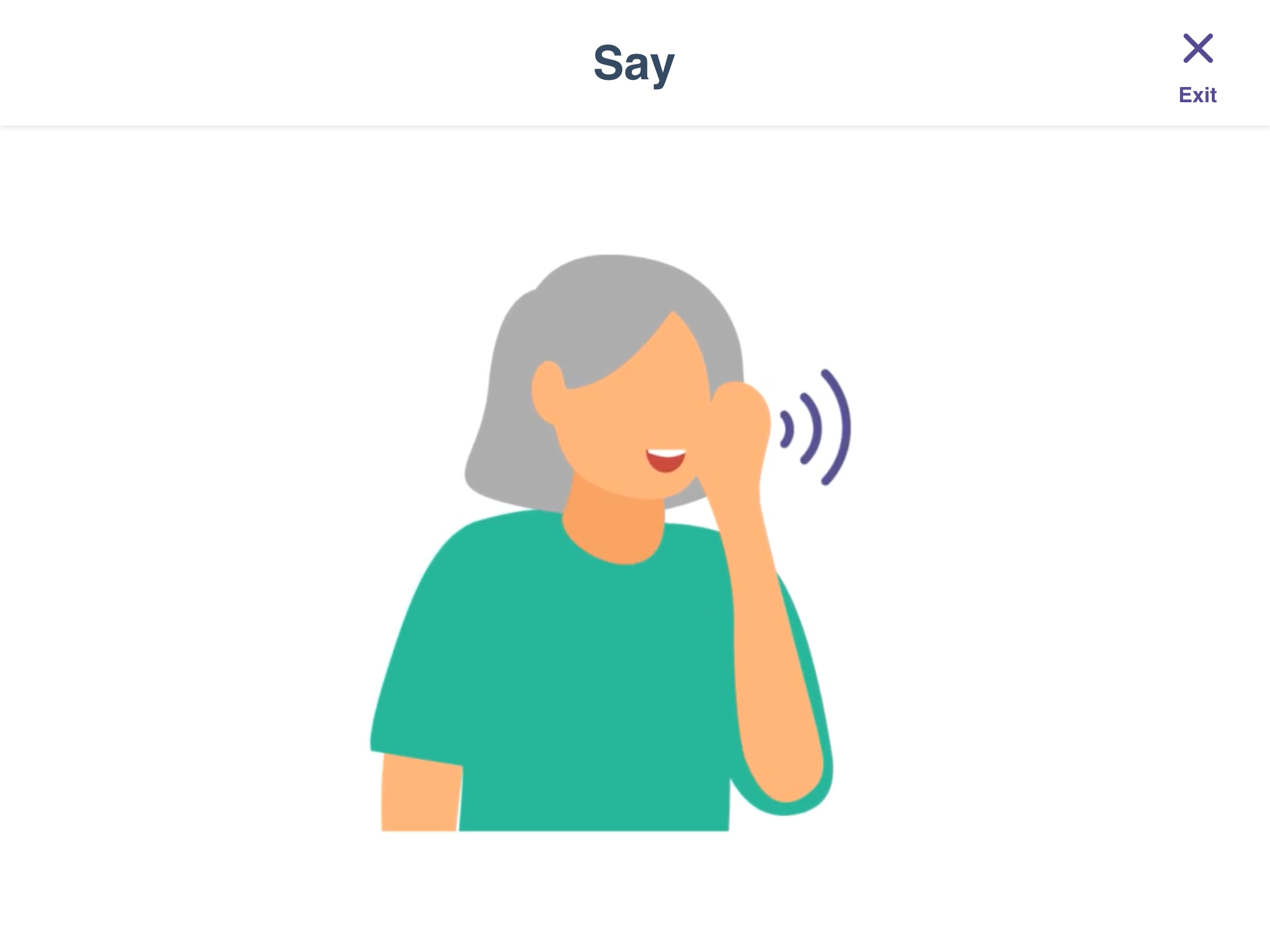
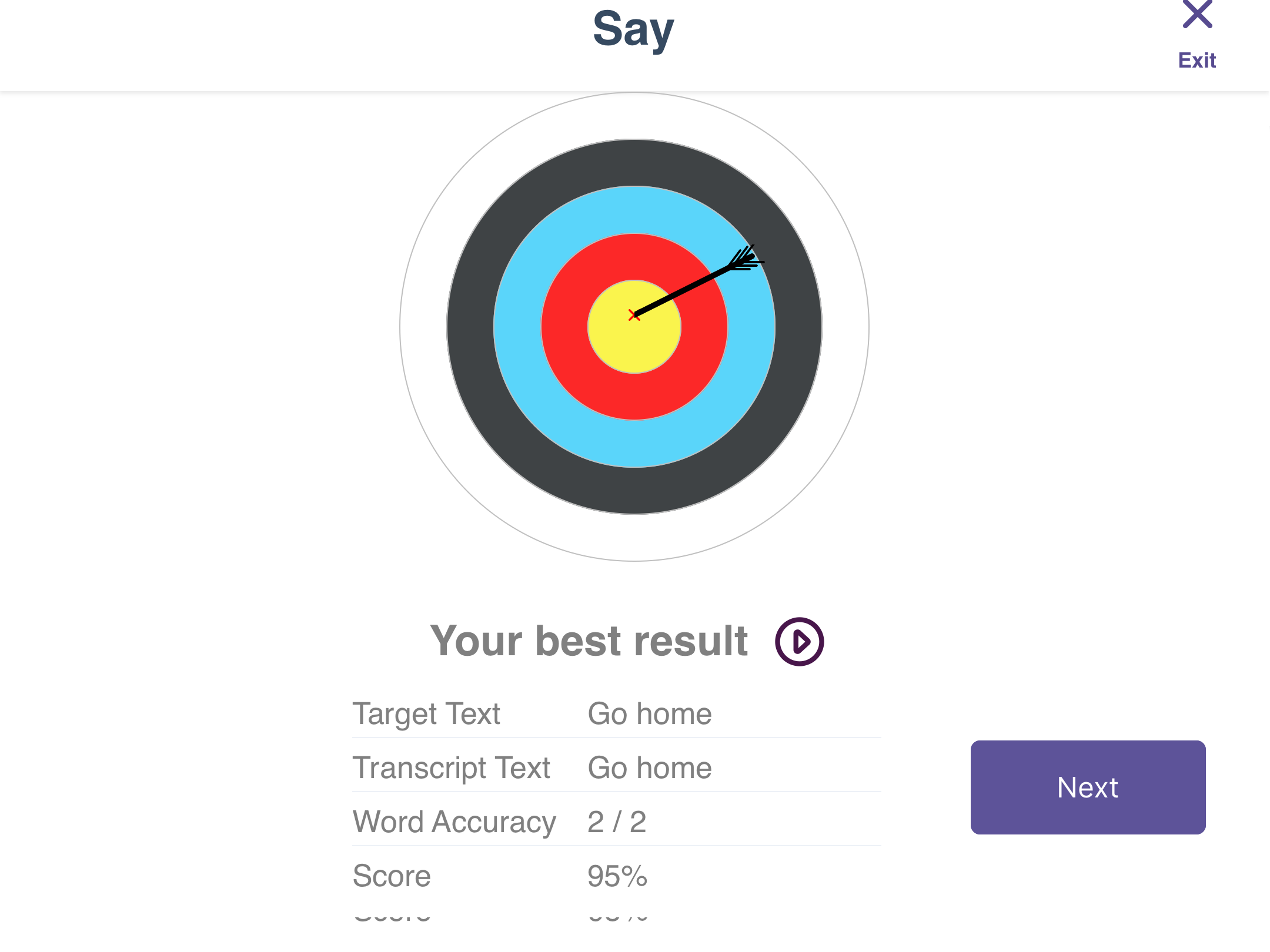
“Speak - Say Sentences”
Have a go at saying the sentences yourself! The app will record you, and give you feedback on your attempts.
For more information about what we do, you can watch our video, in which our PhD researcher, Kerry Dathan, explains UTILISE and the importance of tele-health models:
Kerry Dathan, Professor Rosemary Varley, and Tony explain the value of research and why we are working to develop tele-health therapy for aphasia.
Read more about our design, hypotheses, plan for analysis and more here.
The project team is multidisciplinary and comprises Professor Rosemary Varley, Dr Jane Warren, Dr Claudia Bruns, Ms Fern Rodgers and Mrs Kerry Dathan at UCL; and Dr Amir-Homayoun Javadi (Kent).
Sites
University College London
UTILISE-1 timeline
2019-2023
UTILISE-2 TIMELINE
2023-2026
core Team
Prof. Rosemary Varley (PI)
Dr. Jane Warren (CI)
Dr. Amir-Homayoun Javadi (CI)
Dr. Claudia Bruns (postdoctoral researcher)
Mrs Kerry Dathan (PhD researcher)
+ Publications (click to expand)
Bruns, C., Fleming, V., Rodgers, F., Dathan, K., Warren, J., Javadi, A. H., & Varley, R. (2026). Measuring proximal outcomes of sentence production therapy: probing treated and untreated constructions with a story completion test. Aphasiology, 1–18. https://doi.org/10.1080/02687038.2026.2706852
Bruns, C., Rodgers, F., Dathan, K., Dean, M., Warren, J., Fleming, V., Javadi, A.-H., & Varley, R. (2025). Reconstructing sentence processing in aphasia: a randomised control trial of a usage-based intervention. Aphasiology, 1–26. https://doi.org/10.1080/02687038.2025.2530572
Dathan, K., Bruns, C., Rodgers, F. E., & Varley, R. (2023, August 25). UTILISE-2: A telerehabilitation app for sentence difficulties in post-stroke aphasia. https://doi.org/10.17605/OSF.IO/FWR3K
Bruns, C., Beeke, S., Zimmerer, V.C., Bruce, C., & Varley, R.A. (2021). Training flexibility in fixed expressions in non-fluent aphasia—a case series report. International Journal of Language & Communication Disorders, 56, 1009– 1025.
Varley, R., Bruns, C., Warren, J., Dąbrowska, E., & Javadi, A.-H. (2020, March 18). Computer therapy combined with non-invasive brain stimulation for sentence processing difficulties in post-stroke aphasia: a randomised control trial (the UTILISE study). OSF Preprints, doi:10.31219/osf.io/fduqh
Varley, R., Cowell, P.E., Dyson, L., Inglis, L., Roper, A., & Whiteside, S.P. (2016). Self-Administered Computer Therapy for Apraxia of Speech: Two-Period Randomized Control Trial with Crossover. Stroke, 47(3), 822-828. doi:10.1161/STROKEAHA.115.011939
Varley, R. (2011). Rethinking aphasia therapy: a neuroscience perspective. Int J Speech Lang Pathol, 13(1), 11-20. doi:10.3109/17549507.2010.497561